Computer execute machine language(or instruction): 0 and 1
Assembly language: each instruction is identified by a abbrevation A program called assembler, translate it in machine language.
High level language such as C/C++, must be transormed. This is done with compiling and interpreting
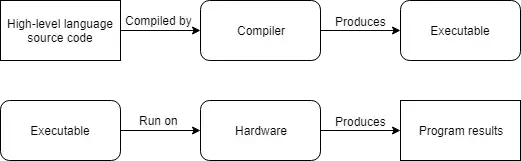
A compiler read source code and produces stand alone executable program that can be run.
diagram
A interpreter is a program that directly execute the instructions in the source code. Without requiring them to be compiled.
They tend to be more flexible than compilers but less efficient because it needs to be done each time the program run.
A build configuration (or build taget), is a collection of settings that determines how to build a project.
Contain info like, executable name, libraries to look for, how much optimization to make…
Two main configuration:
1. Release
2. Debug
self contain: not reliant on other program